What Is Feed-Grade Biochar?
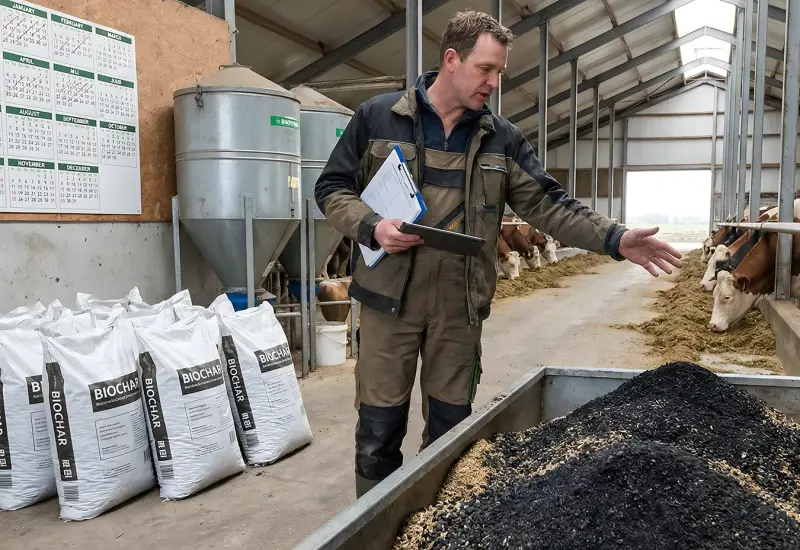
Feed-grade biochar is a carbon-rich material produced from natural biomass and processed specifically for inclusion in animal feed systems. Unlike general-purpose biochar, it is refined, screened, and handled to meet safety and consistency expectations for livestock use.
It is used where stability and adsorption matter more than nutrient contribution. Feed-grade biochar does not provide energy or protein. Its role is to support digestion by binding certain compounds inside the gut and helping maintain balance over time.
When produced correctly, feed-grade biochar remains structurally intact during digestion. This allows it to perform its function without breaking down or interfering with nutrient uptake. For livestock systems that depend on repeatable outcomes, this behaviour is essential.
SoilCarb focuses on biochar suited for commercial feed programs, where predictability matters more than novelty.
Stable Carbon Structure
Maintains its form through digestion, allowing controlled use of biochar in animal feed.
High Adsorption Capacity
Supports the binding of unwanted compounds within the digestive system.
Consistent Particle Size
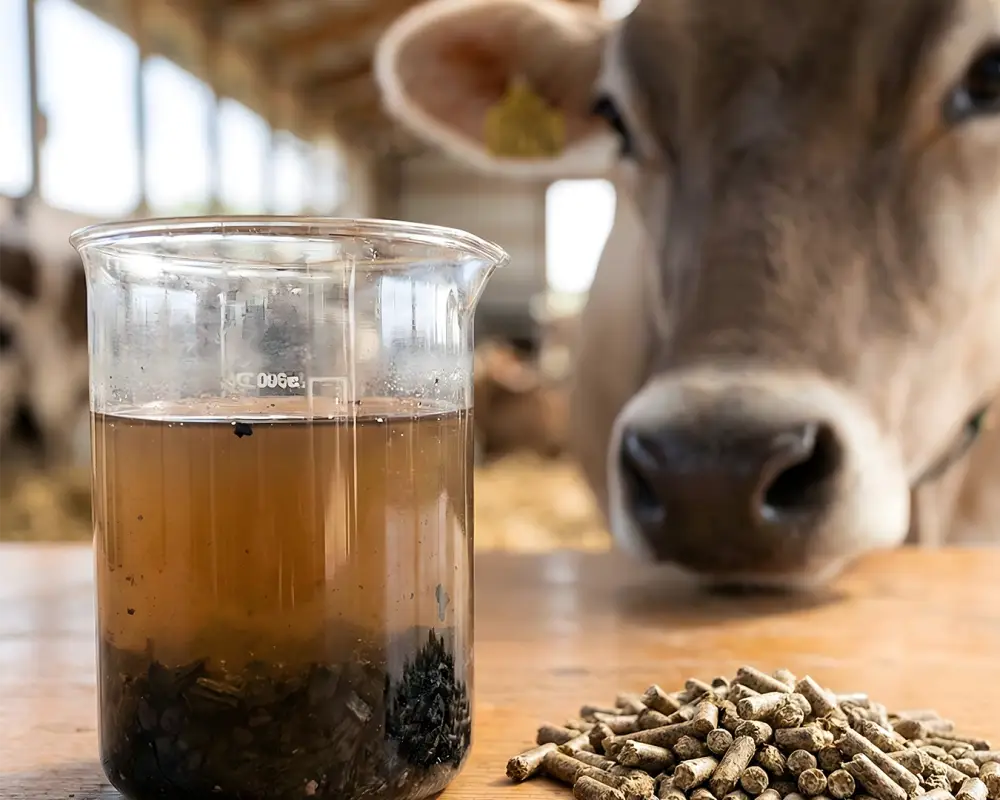
Ensures even mixing in feed rations and predictable behaviour during handling.
Suitable for Emission-Focused Feeding
Used in programs exploring methane reduction biochar as part of broader strategies.
Biochar for Livestock and Feed Systems
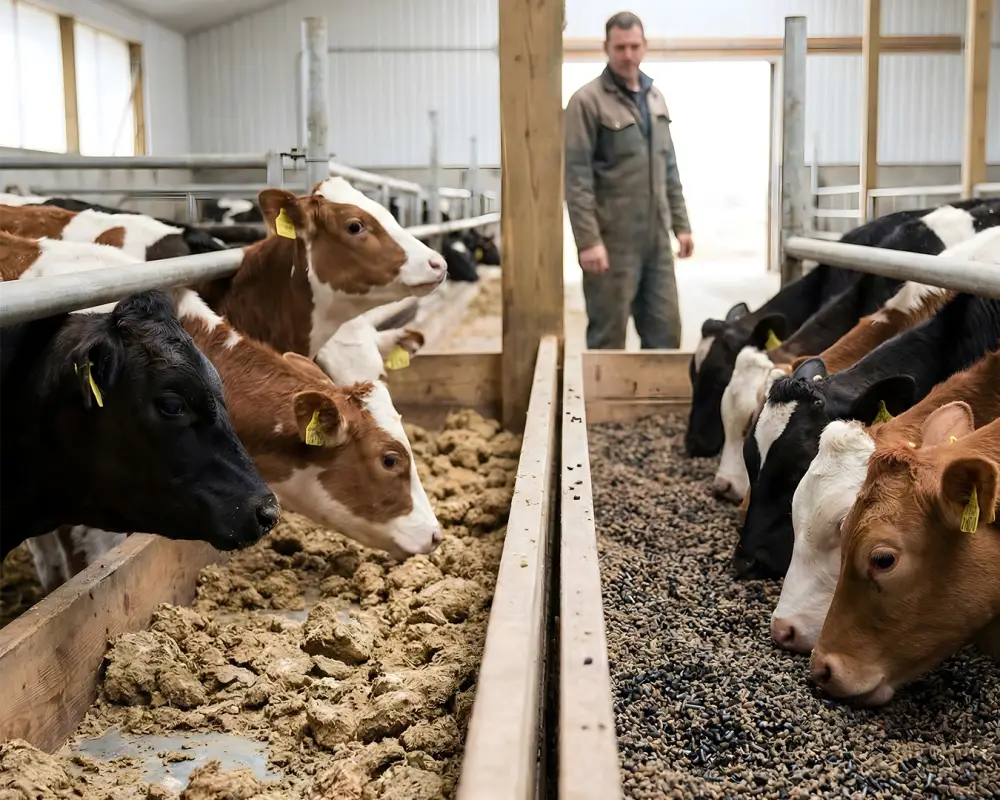
Feed programs today are expected to do more than support growth. They are expected to improve efficiency, protect animal health, and respond to growing pressure around emissions and sustainability. This has shifted how producers look at feed inputs, especially those that influence digestion rather than nutrition.
Biochar for Livestock and Feed Systems
Feed programs today are expected to do more than support growth. They are expected to improve efficiency, protect animal health, and respond to growing pressure around emissions and sustainability. This has shifted how producers look at feed inputs, especially those that influence digestion rather than nutrition.
How Biochar Functions Within the Digestive System?
Biochar does not act like a feed additive that dissolves or reacts quickly. Instead, it provides a physical surface inside the digestive system. This surface can bind certain compounds, reducing internal stress and supporting a more stable environment for digestion.
One of the first changes often observed is consistency. Feed behaviour becomes more predictable. Animals show steadier responses rather than sharp fluctuations. These effects tend to appear gradually, which aligns with how biological systems adjust.
Microbial balance plays a role here. By moderating the availability of certain compounds, biochar can create conditions that enable beneficial microbes to function more efficiently. This does not happen overnight. It develops as part of a longer feeding cycle.
SoilCarb supplies biochar with controlled particle size and low contamination risk so it integrates smoothly into rations. In feed systems, even small inconsistencies can create issues. That is why material control matters.
Where Biochar Is Used in Animal Feed Systems?
Ruminant Livestock Systems
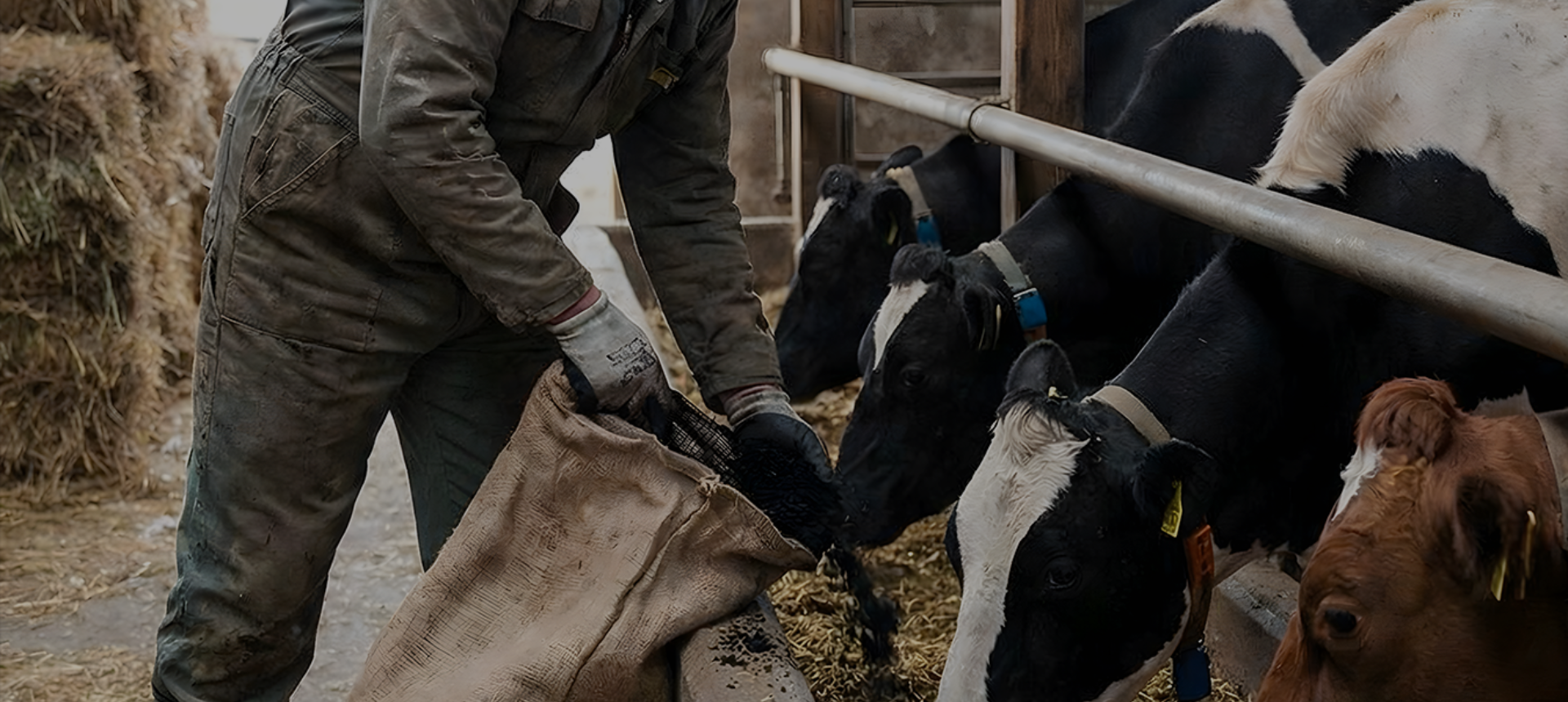
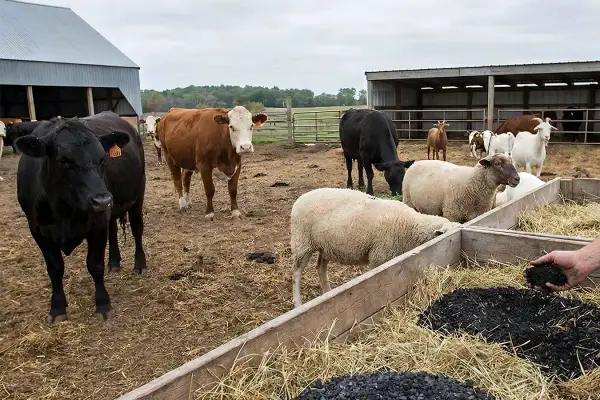
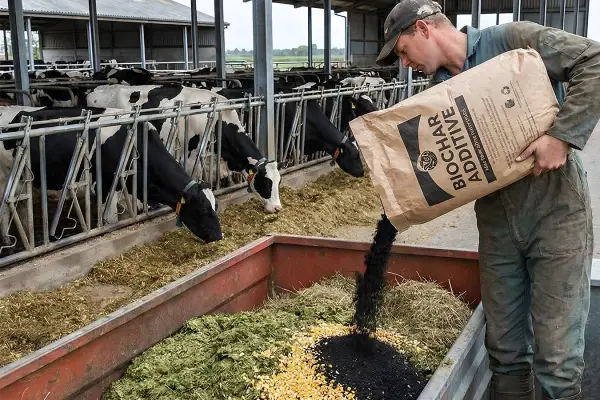
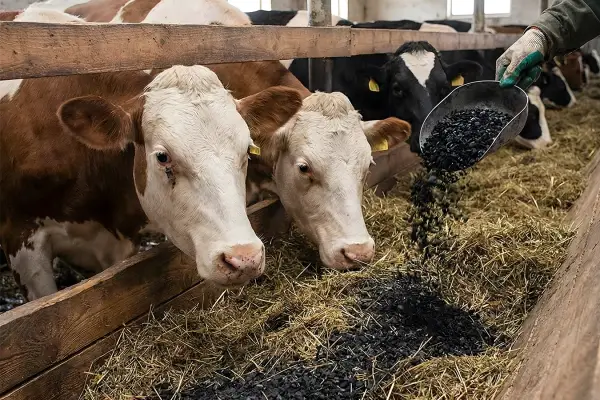
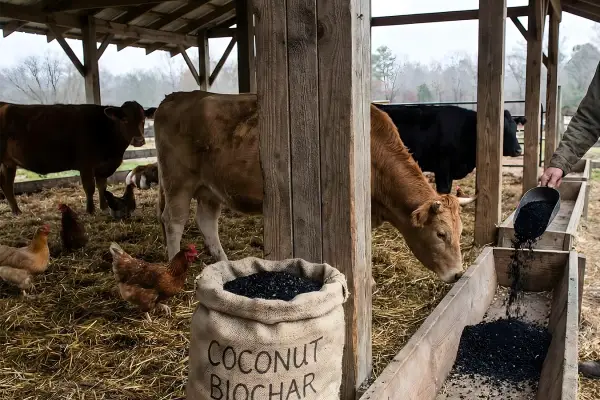
Biochar is used in cattle, sheep, and goat feed programs to support digestive balance. In ruminant systems, gut stability is closely linked to feed efficiency and overall animal condition.
Dairy Operations
In dairy feed programs, biochar is included to support rumen function and steady digestion. Producers value inputs that integrate without altering milk routines or feed structure.
Poultry and Monogastric Feed
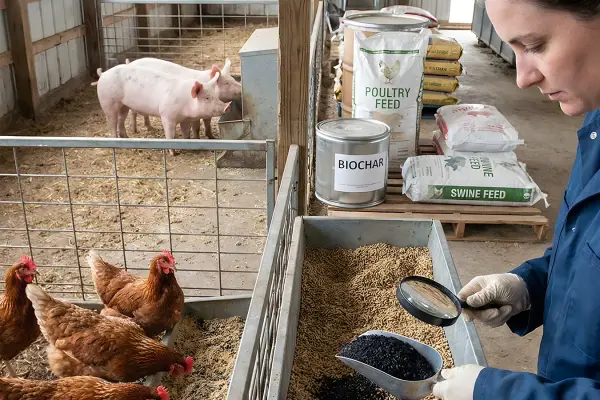
Biochar is evaluated in poultry and pig systems where adsorption and gut stability matter. Particle size and purity are especially important in these applications.
Aquaculture Feed Programs
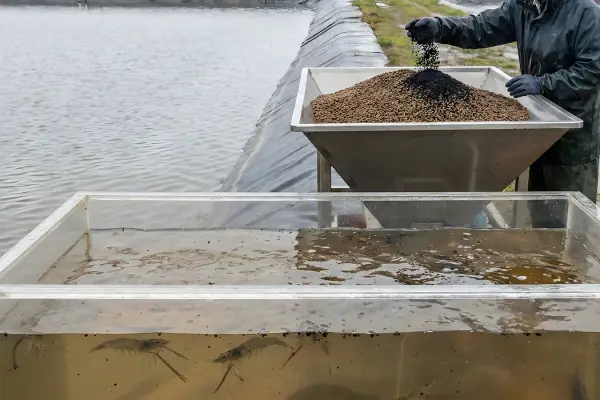
In fish and shrimp systems, biochar is used in feed and water-adjacent applications to support stability and reduce the buildup of unwanted compounds.
Methane-Focused Feeding Strategies
Methane-reduction biochar is used in emission-focused livestock programs. Its role is linked to digestion stability rather than chemical inhibition.
Organic and Low-Input Livestock Systems
Coconut biochar for livestock feed is often preferred in organic or low-input systems due to its purity and consistent behaviour.
From Feed Input to Manure and Soil
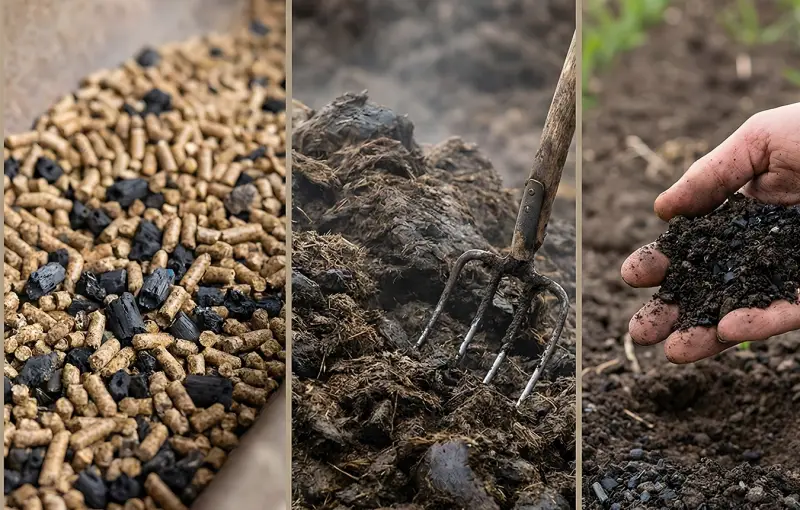
Biochar often passes through digestion largely intact. This means its role does not end at the animal. Manure containing biochar tends to show improved structure and reduced odour, which supports easier handling and storage.
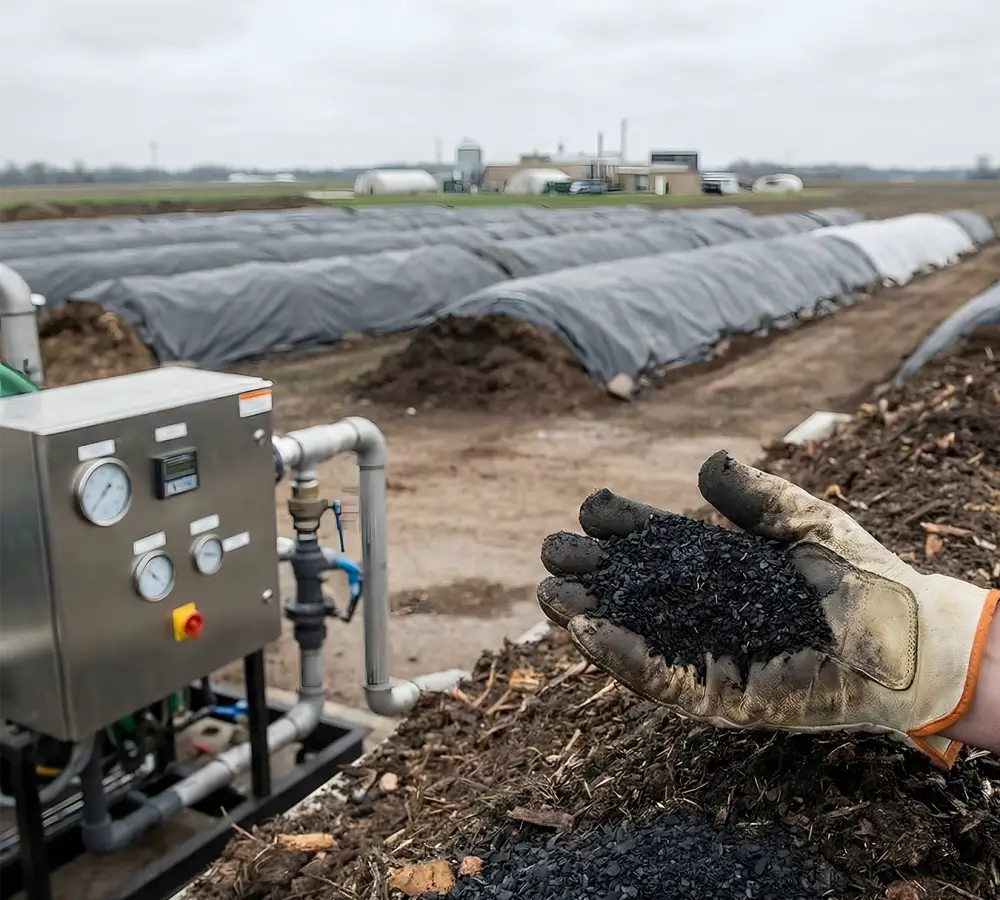
When this manure is returned to land, biochar continues to function in the soil. It supports nutrient retention and soil structure, creating a natural link between feed systems and soil health.
For integrated farms, this closed-loop effect matters. A feed input becomes a soil input without additional processing. SoilCarb considers this full lifecycle when supplying feed-grade biochar.
SoilCarb Feed-Grade Biochar Key Benefits
Digestive Stability Support
Biochar supports a more balanced digestive environment by binding certain compounds within the gut. This helps reduce internal stress and supports steadier feed response over time without altering nutrient availability.
Improved Feed Consistency
When used as a biochar feed supplement, feed behaviour becomes more predictable. This supports consistent intake and reduces sudden variation in digestion across feeding cycles.
Supports Emission-Focused Programs
Biochar is used in methane reduction biochar strategies where repeatable performance is essential. Its stable structure allows it to function consistently within long-term emission plans.
Biochar in Feed Planning and Long-Term Cost
Biochar feed supplement cost is often viewed upfront, but its value appears over time. Unlike additives that require frequent adjustment, biochar remains active across long feeding cycles.
As feed efficiency improves and systems stabilize, biochar becomes part of routine operation rather than a trial input. This changes how cost is assessed. It becomes an investment in system consistency rather than a recurring correction.
For producers planning long-term, this perspective matters more than short-term pricing.
What They Say
What we liked most was the consistency of the material. No dust issues and easy to mix into existing soil. We used it for our vegetable beds and saw steadier plant growth through the season.
Austin, Texas, USA

Rachel Turner
Our challenge here is sandy soil and high heat. After adding this biochar, the soil held moisture longer than before. It did not replace fertilizers, but it definitely improved overall soil condition.
Al Ain, Abu Dhabi, UAE

Saeed Al Nuaimi
We tested it inside our greenhouse before committing to bulk use. The soil stayed loose and did not harden after irrigation cycles. The results were stable enough for us to continue using it.
Suwon, Gyeonggi-do, South Korea

Min-Jae Kim
Talk to SoilCarb About Feed-Grade Biochar
If you are evaluating biochar in animal feed, coconut biochar sourcing, or emission-focused feeding programs, the best place to start is a clear conversation.
Tell us about your livestock system, feed structure, and objectives. We will help you assess whether a biochar feed supplement fits your operation and how it can be introduced without disruption.
Whether your focus is on digestion stability or methane reduction biochar, we keep the discussion practical and grounded.