What Regenerative Agriculture Looks Like on the Ground?
Regenerative agriculture is a land management approach focused on rebuilding soil health, improving biodiversity, and restoring natural cycles. Unlike conventional systems that prioritize short-term yield, regenerative practices aim to improve the land year after year.
In regenerative systems, soil is treated as a living structure. Biology, organic matter, and mineral balance work together. Inputs are chosen carefully because they affect that balance over many seasons, not just one crop cycle.
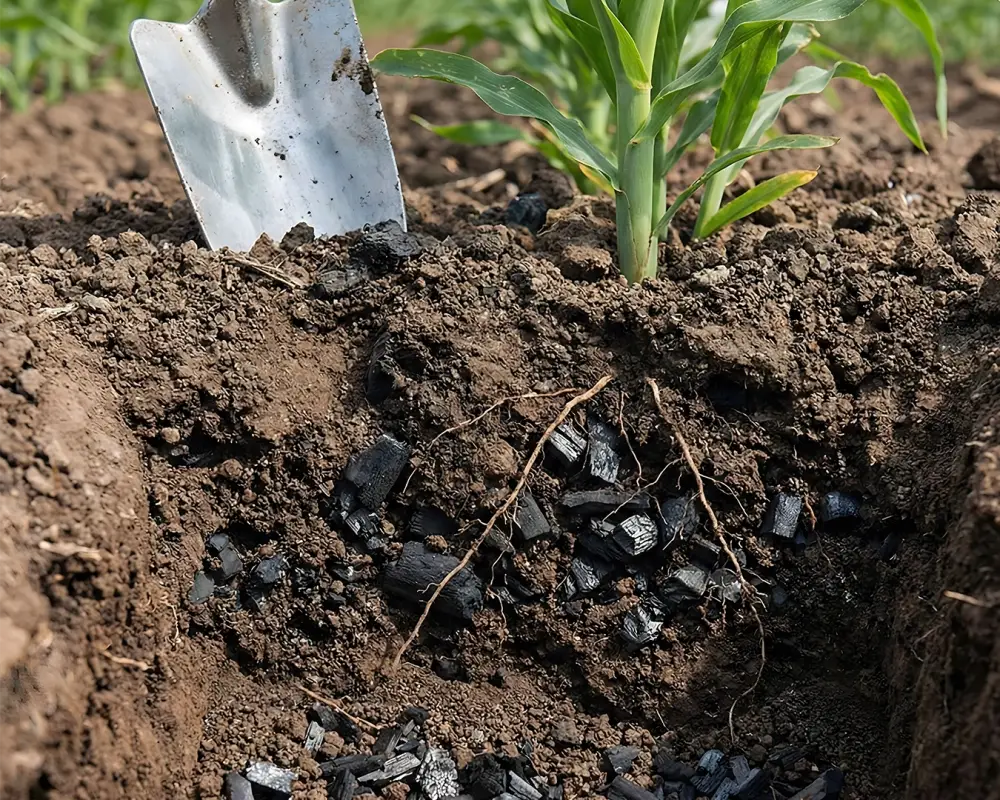
Biochar supports this system by changing the physical environment of the soil. It improves aggregation. It creates internal pore space. It supports microbial life without forcing chemical reactions. This is why biochar for sustainable agriculture is increasingly considered a structural input rather than a nutrient input.
Regenerative practices appear across cropping systems, pasture, orchards, and mixed farms. In all cases, materials used must be predictable, safe, and compatible with living soil processes. Biochar meets those requirements when sourced and applied correctly.
Soil Function Comes First
Regenerative systems prioritize soil structure, airflow, and biology over short-term yield response.
Carbon That Remains Stable
Biochar remains in soil for decades, supporting biochar for carbon sequestration rather than temporary storage.
Reduced Reliance on Correction
As soil improves, dependence on repeated fertilizers and soil fixes begins to fall.
Adaptable Across Farm Scales
Regenerative practices and biochar use scale from small holdings to commercial acreage.
Regenerative Agriculture Built for Soil That Lasts
Regenerative agriculture is about restoring balance in soil systems that have been pushed too hard for too long. Farmers who move toward regenerative systems are usually responding to what they see in the field. Soil that dries too quickly. Inputs that keep increasing. Yields that depend more on correction than on balance.
Regenerative Agriculture Built for Soil That Lasts
Regenerative agriculture is about restoring balance in soil systems that have been pushed too hard for too long. Farmers who move toward regenerative systems are usually responding to what they see in the field. Soil that dries too quickly. Inputs that keep increasing. Yields that depend more on correction than on balance.
How Biochar Supports Regenerative Soil Systems?
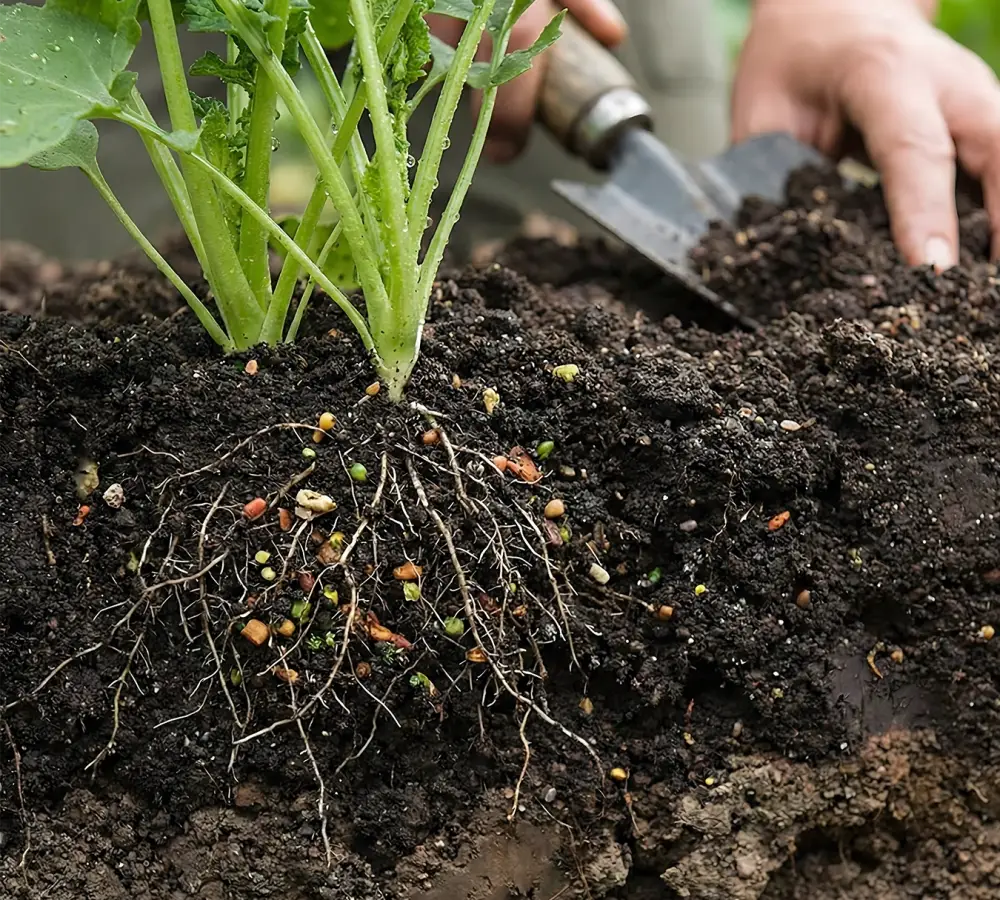
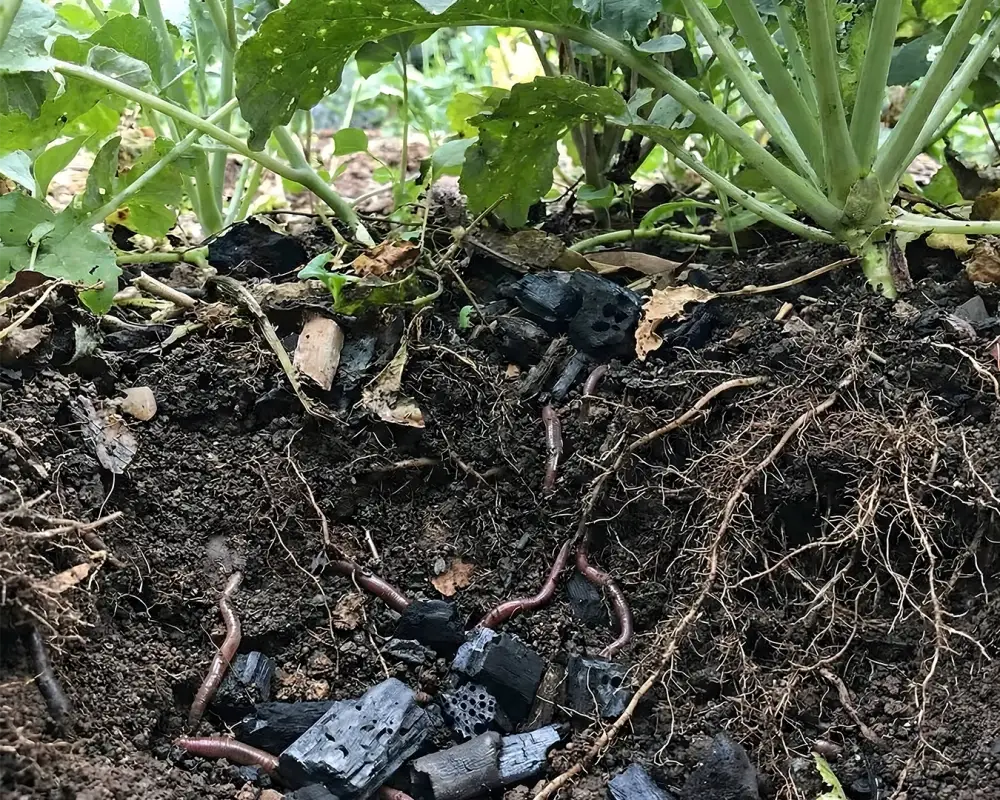
Biochar does not replace good farming practices. It supports them. Its porous structure creates space within the soil profile, improving aeration and water movement. These changes help roots develop more freely and reduce stress during dry periods.
At a microbial level, biochar provides a stable habitat. Beneficial bacteria and fungi colonise its surface, improving nutrient availability and soil resilience. Over time, this supports healthier root systems and more efficient nutrient uptake.
SoilCarb supplies biochar selected for agricultural use, with controlled particle size and low contamination risk. This ensures predictable behaviour once applied. In regenerative systems, consistency matters. Inputs must support the system quietly, not interfere with it.
For farms focused on biochar for sustainable agriculture, performance over time is more important than immediate visual change. Biochar delivers that slow, steady improvement.
Where Biochar Is Used in Regenerative Agriculture
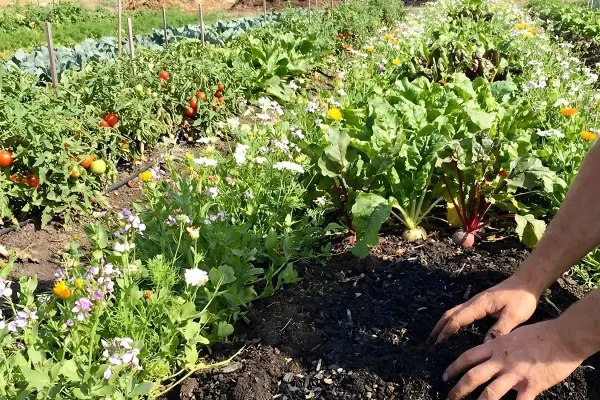
Cropland and Field Crops
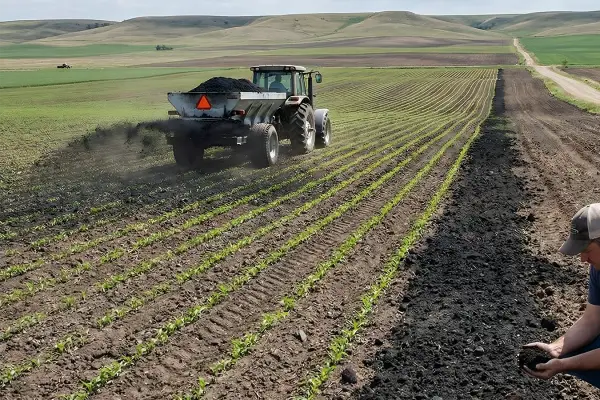
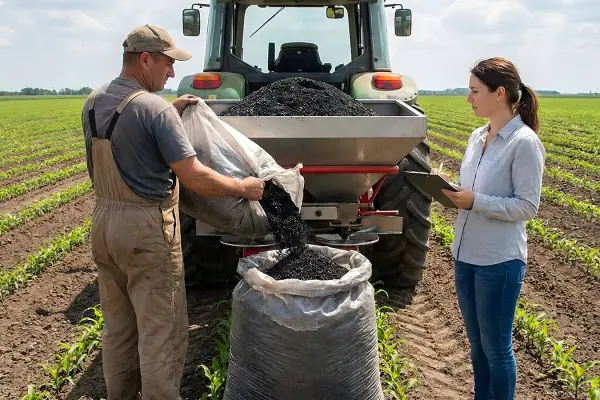
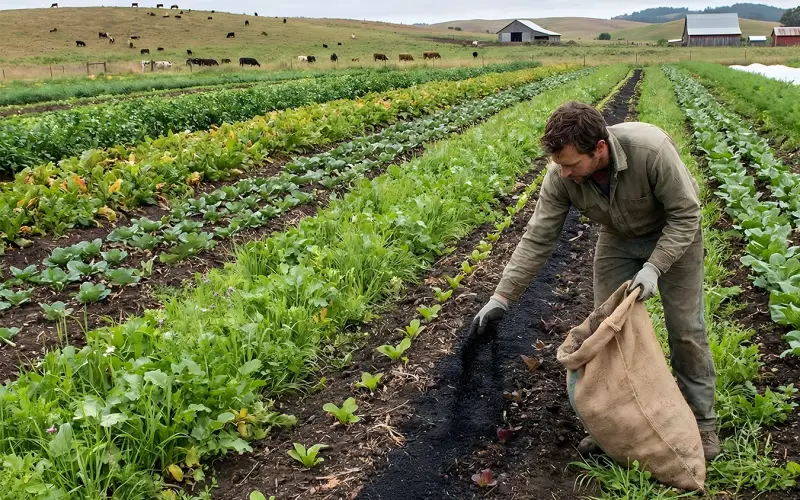
Biochar is applied to cropland to improve soil structure, nutrient retention, and water holding capacity. These improvements support healthier root systems and reduce nutrient loss, particularly in fields transitioning away from intensive chemical inputs.
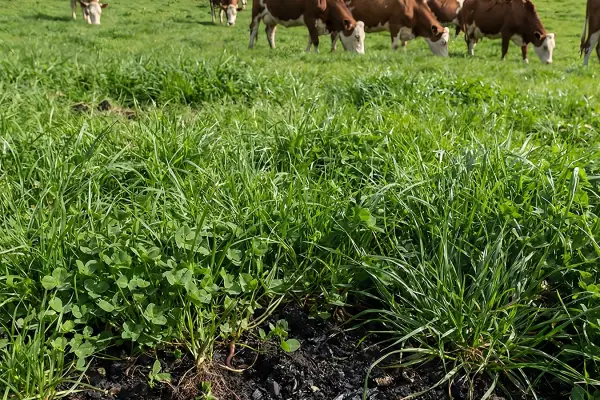
Pasture and Grazing Systems
In pasture soils, biochar supports moisture retention and biological recovery. Improved soil condition leads to stronger forage growth, better ground cover, and reduced erosion under grazing pressure.
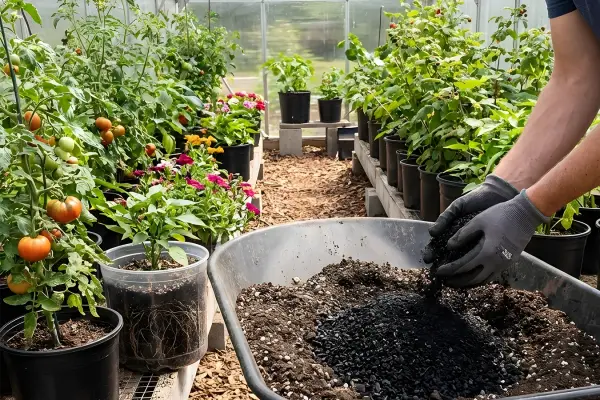
Horticulture and Specialty Crops
Biochar is used in horticulture to stabilize soil conditions and growing media. It supports root health and moisture balance in systems where soil consistency directly affects crop quality.
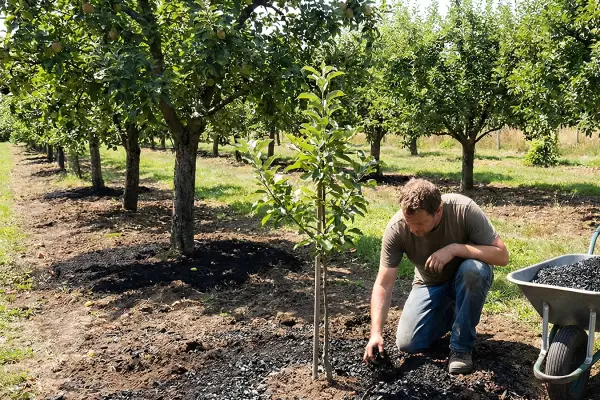
Orchards and Tree-Based Systems
Tree crops benefit from biochar’s permanence. Applied during planting or soil preparation, biochar improves root-zone conditions over extended growth cycles, ensuring soil changes endure.
Organic and Low-Input Farms
Biochar integrates well into organic systems where synthetic inputs are limited. It supports nutrient efficiency and soil health without introducing residues or disruptive chemistry.
Carbon-Focused Land Programs
Biochar is increasingly used in projects evaluating carbon offset materials for agriculture, where both soil improvement and durable carbon storage are required.
Regenerative Agriculture and Carbon Planning
Regenerative agriculture increasingly sits at the intersection of food production and climate strategy. Land managers are expected to deliver both productivity and environmental outcomes.
Biochar supports this dual role. It improves soil while serving as one of the few carbon-offset materials for agriculture that physically stores carbon in the soil. Unlike temporary practices, biochar’s impact lasts for decades.
For farms, cooperatives, and land programs planning long-term, biochar provides measurable, durable value. It aligns agronomic goals with carbon outcomes without forcing trade-offs.
SoilCarb Biochar Benefits in Regenerative Farming
Long-Term Soil Improvement
Biochar remains in soil for decades. Over time, it improves structure, moisture retention, and biological activity. This supports regenerative systems focused on land health rather than short-term correction.
Carbon Stored Below Ground
Biochar locks carbon into a stable form within the soil. This supports biochar for carbon sequestration while also improving soil performance.
Improved Nutrient Retention
Nutrients remain available in the root zone for longer periods. This reduces leaching losses and improves nutrient efficiency over time.
What They Say
What we liked most was the consistency of the material. No dust issues and easy to mix into existing soil. We used it for our vegetable beds and saw steadier plant growth through the season.
Austin, Texas, USA

Rachel Turner
Our challenge here is sandy soil and high heat. After adding this biochar, the soil held moisture longer than before. It did not replace fertilizers, but it definitely improved overall soil condition.
Al Ain, Abu Dhabi, UAE

Saeed Al Nuaimi
We tested it inside our greenhouse before committing to bulk use. The soil stayed loose and did not harden after irrigation cycles. The results were stable enough for us to continue using it.
Suwon, Gyeonggi-do, South Korea

Min-Jae Kim

Talk to SoilCarb About Regenerative Agriculture
If you are exploring biochar for regenerative farming, soil restoration, or carbon-focused land use, a clear conversation is the right place to start. SoilCarb works with growers and land managers who need realistic expectations and reliable material.
Tell us about your land, crops, and long-term goals. We will help you assess how biochar regenerative farming fits into your system.
Whether your focus is soil health, resilience, or biochar for carbon sequestration, we keep the discussion grounded.